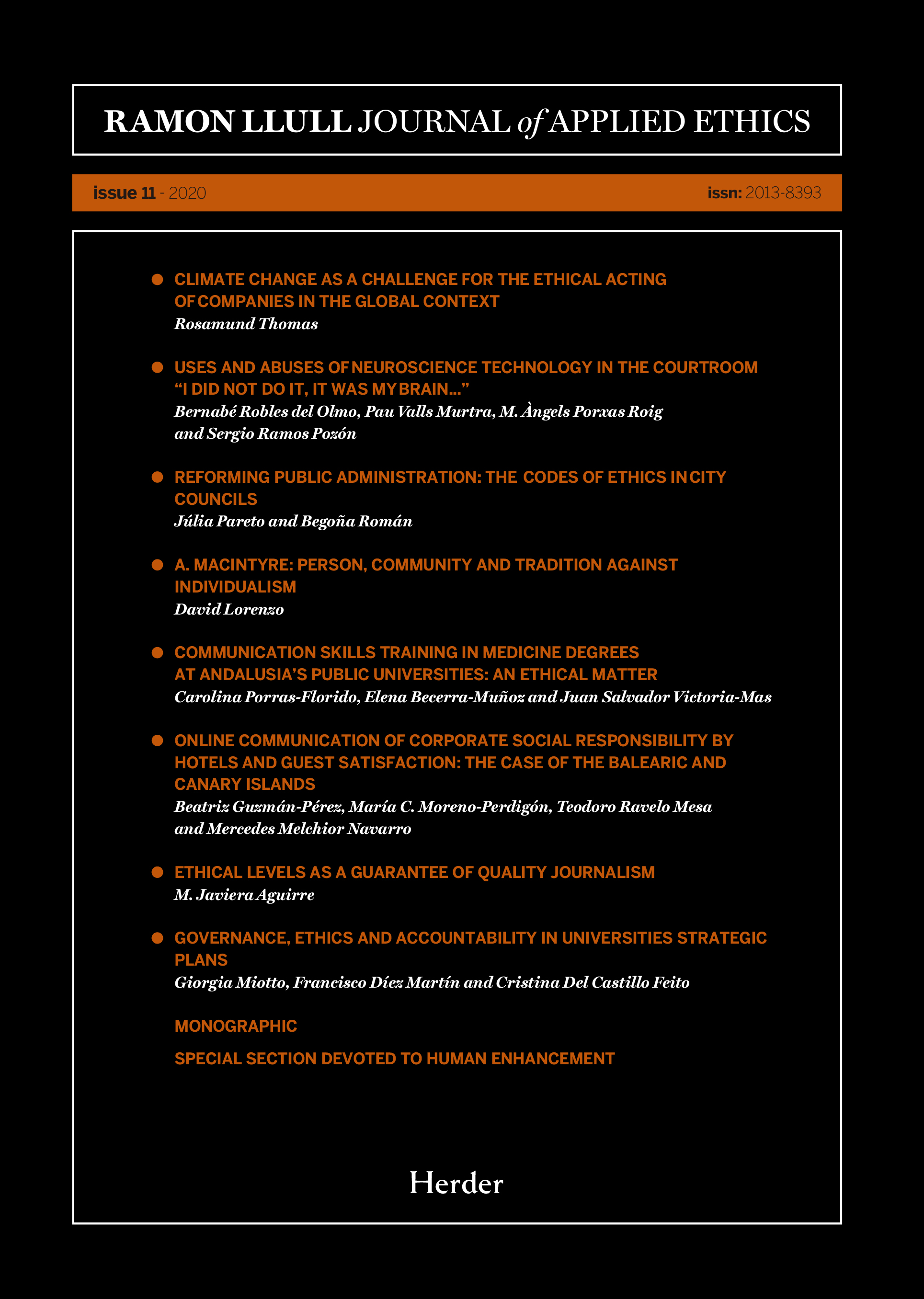
Uses and abuses of neuroscience technology in the Courtroom. "I did not do it. It was my brain..."
Article Sidebar
Main Article Content
Classic evidence admitted in the courts of justice has obvious limitations, especially because of the low reliability of eyewitness memory. For many years, neurological diseases have been considered when estimating the responsibility and imputability of the defendants. However, with the emergence of neuroscience and neurotechnology in the last 20 years, the contribution of tests based on brain diagnostic techniques has increased exponentially with different purposes: attenuation or exoneration criminal responsibility, validation of witnesses, recognition of physical evidence and crime scene, acceptability of the members of the jury, etc. In this article we propose a review of the scientific evidence that may or may not support these applications of neurotechnology in courts, as well as the ethical and legal implications that this new paradigm may imply.
Article Details
(c) Ramon Llull Journal of Applied Ethics, 2020
Articles més llegits del mateix autor/a
- Sergio Ramos Pozón, Bernabé Robles del Olmo, Sonia Sevilla Guerra, Decision making in patients with anorexia nervosa: a bioethical and methodological challenge , Ramon Llull Journal of Applied Ethics: Núm. 13 (2022): Issue 13