Reguetón, narcocultura y bandidaje social en el filme puertorriqueño "Talento de barrio"
Article Sidebar
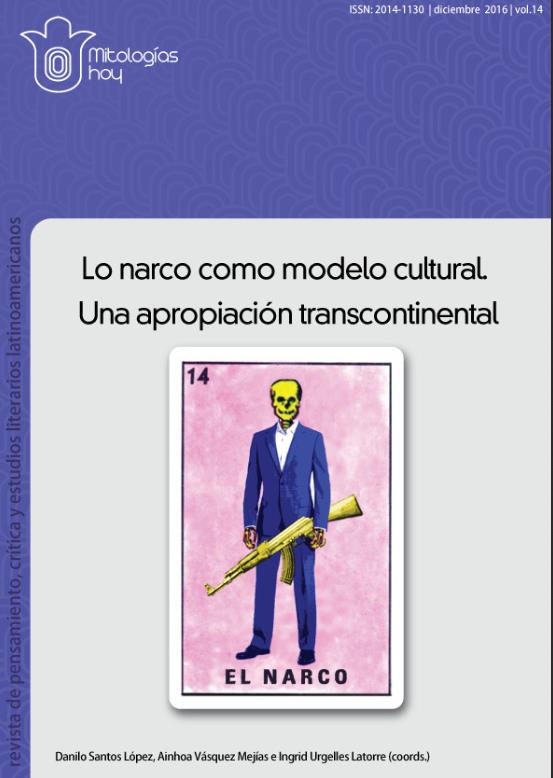
Main Article Content
Talento de barrio, el filme puertorriqueño más taquillero de la historia, tiene como protagonista a Édgar, un maleante interpretado por la superestrella del reguetón Daddy Yankee. Mediante el contraste entre Édgar y otros personajes claramente antisociales, la película parece apuntar a la posibilidad del bandido social como una figura al margen de la legalidad, pero de signo positivo. Este ensayo recurre a autores como Hobsbawm, Benjamin, Agamben y otros para explorar el resurgimiento de un cierto tipo de bandidaje social, vinculado al narcotráfico y a la violencia extrema que conlleva, en la imaginación cinematográfica latinoamericana de hoy.
Article Details
Cómo citar
Ponce-Cordero, Rafael. «Reguetón, narcocultura y bandidaje social en el filme puertorriqueño “Talento de barrio”». Mitologías hoy, 2016, vol.VOL 14, pp. 135-49, https://raco.cat/index.php/mitologias/article/view/315901.
Derechos
Derechos de autor
Authors who publish with this journal agree to the following terms:- Authors retain copyright.
- The texts published in this journal are – unless indicated otherwise – covered by the Creative Commons Spain Attribution 3.0 licence. You may copy, distribute, transmit and adapt the work, provided you attribute it (authorship, journal name, publisher) in the manner specified by the author(s) or licensor(s). The full text of the licence can be consulted here: http://creativecommons.org/licenses/by/3.0/es/deed.en.
- Authors are able to enter into separate, additional contractual arrangements for the non-exclusive distribution of the journal's published version of the work (e.g., post it to an institutional repository or publish it in a book), with an acknowledgement of its initial publication in this journal.
- Authors are permitted and encouraged to post their work online (e.g., in institutional repositories or on their website) prior to and during the submission process, as it can lead to productive exchanges, as well as earlier and greater citation of published work (See The Effect of Open Access).